

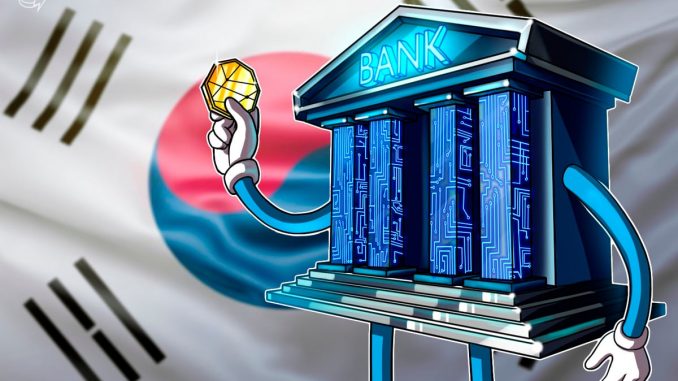

South Korea’s central bank has reportedly renewed its push to keep Korean won-pegged stablecoin issuance in the hands of commercial banks, warning lawmakers that privately issued digital tokens could undermine monetary policy and create new foreign-exchange and financial-stability risks.
In a report submitted to South Korea’s National Assembly Strategy and Finance Committee, the Bank of Korea (BOK) described won stablecoins as “currency-like substitutes” and said their introduction must account not only for industrial benefits but also for monetary policy, foreign exchange stability and financial risks, according to local reporting.
The central bank reiterated concerns that stablecoins could be used to bypass foreign exchange regulations, including prior reporting requirements, and argued that allowing non-bank entities to issue them independently could conflict with Korea’s separation of banking and commerce principles.
It added that banks, which are subject to capital, governance and compliance standards, should be permitted first, with any expansion beyond banks proceeding gradually after risk assessments.
The report lands as lawmakers debate a delayed stablecoin framework, with one of the main sticking points being who should be eligible to issue won-pegged tokens and how much control banks should hold in any issuing entity.
Cointelegraph reached out to the Bank of Korea for more information, but had not received a response by publication.
Central bank proposes safeguards against stablecoin risks
The bank reportedly said programmable stablecoins could support digital asset innovation and function as payment tools, but it also floated structural safeguards, including a bank-centered consortium model and a statutory interagency policy body that could coordinate approvals and supervision across regulators.
The BOK reportedly cited the United States’ GENIUS Act framework as an example of cross-agency supervision that involves the Treasury Department, Federal Reserve and the Federal Deposit Insurance Corporation.
Related: Wemade taps Chainlink for Korean won stablecoin infrastructure
Debate stalls broader stablecoin framework
The BOK’s report echoes its earlier warnings, which argue that banks should lead the rollout for stablecoin issuance since they are already subject to strict regulatory requirements. However, that approach has faced pushback from industry participants and some lawmakers.
Sangmin Seo, the chair of the Kaia DLT Foundation, previously told Cointelegraph that the argument for banks leading the stablecoin rollout lacks a “logical foundation.” Seo said that establishing clearer rules for issuers could minimize risks.
On Nov. 25, 2025, regulators remained split over whether banks should hold a majority stake in stablecoin issuers, leading to a delay in legislation initially expected in October.
On Dec. 15, lawmakers said they expected a resolution in January. However, a final legislative timeline has yet to be announced.
Magazine: Hong Kong stablecoins in Q1, BitConnect kidnapping arrests: Asia Express



Be the first to comment